
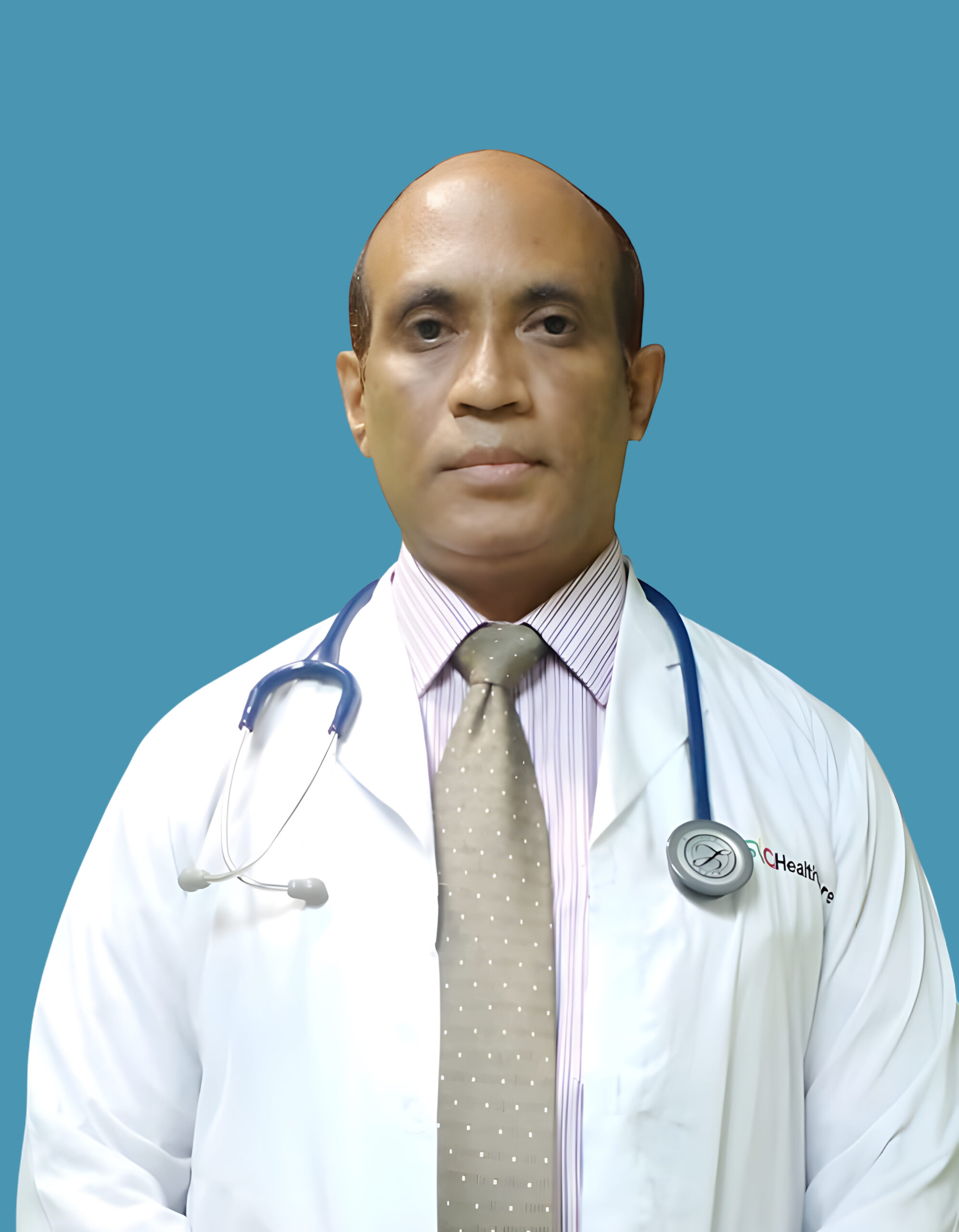

A Neurosurgery Doctor in Chattogram for Brain, Spine & Nerve Problems
If you are searching for a neurosurgery specialist in Chattogram (Chittagong) for concerns related to the brain, spine, nerves, head injury, neck/back pain with numbness, or weakness, Dr. Md. Saiful Alam is a BMDC-registered neurosurgeon who provides patient care with a strong academic and hospital-based background.
Dr. Md. Saiful Alam is an Associate Professor & Head of the Department (Neurosurgery) at Chattogram Medical College Hospital (CMCH). Alongside his hospital responsibilities, he also sees patients at his private chamber in Panchlaish, Chattogram at Epic Health Care CMCH Main Gate Branch, where patients can book appointments for consultation and follow-up. He also provides online consultation, which can be helpful for report review, follow-up care, and guidance when travel is difficult.
- Associate Professor & Head of the Department (Neurosurgery), Chattogram Medical College Hospital
- Private Chamber: Epic Health Care CMCH Main Gate Branch, Chittagong
- Online Consultation: Yes
- Appointment Number: 01845239405
- Chamber Time: 6:00 PM – 9:00 PM (Friday Closed)
- Consultation Fee: New Patient – 1000 BDT
- Chamber Address: Epic Center, 19 K.B Fazlul Kader Road, Panchlaish, Chattogram
- Experience: 10 years
- BM&DC Registration: A 24533
- Specialty: Neurosurgery
Qualifications & Credentials (Education + Training)
Patients often ask, “What do these degrees mean?” Here’s a clear explanation of Dr. Md. Saiful Alam’s qualifications:
- MBBS – The foundational medical degree that qualifies a doctor to practice medicine.
- BCS (Health) – Indicates selection into the Bangladesh Civil Service (Health), reflecting competitive merit-based entry into government health service.
- MS (Neurosurgery) – A postgraduate surgical specialization focused on conditions of the brain, spinal cord, spine, and peripheral nerves.
Associate Professor & Head (Neurosurgery)
Dr. Md. Saiful Alam serves as Associate Professor & Head of the Department (Neurosurgery)—a role that typically involves:
- Managing complex neurosurgery cases,
- Supervising clinical teams and trainees,
- Contributing to academic teaching and clinical governance,
- Supporting evidence-based decision-making in patient care.
Chattogram Medical College Hospital
Chattogram Medical College Hospital is one of the major tertiary public hospitals in Bangladesh. Tertiary centers play a key role in handling complicated referrals—especially conditions such as severe head injury, brain hemorrhage, spinal emergencies, or cases needing neurosurgical evaluation.
For patients, a doctor who is active in a tertiary hospital setting often brings:
- Exposure to a wide range of complex cases,
- Strong diagnostic discipline,
- Familiarity with updated clinical protocols,
- Experience working within multidisciplinary teams.
What Does a Neurosurgeon Treat?
A neurosurgeon evaluates and manages conditions involving:
- The brain
- The spine
- The spinal cord
- The peripheral nerves
Common Reasons Patients Visit Dr. Md. Saiful Alam (Neurosurgery)
People in Chattogram and surrounding districts often search online using symptoms—like “back pain with tingling,” “sudden severe headache,” or “head injury doctor.” Below are common categories of problems for which patients may seek neurosurgical consultation. (Final decisions depend on history, examination, and reports.)
1) Head Injury & Road Traffic Injury Assessment
Bangladesh has a significant burden of road traffic injuries, which can cause head trauma and spinal injury. WHO estimates for Bangladesh have reported tens of thousands of deaths from road traffic collisions in some years, showing how critical injury prevention and timely medical evaluation are. (World Health Organization)
In recent Bangladeshi reporting, road injury deaths remain a major concern, reflecting how frequently families may face head injury emergencies. (The Daily Star)
Neurosurgical evaluation may be needed when a patient has:
- Loss of consciousness after an accident,
- Persistent vomiting or worsening headache,
- Confusion, drowsiness, or seizures,
- Weakness in arms/legs,
- Neck pain after trauma,
- Abnormal CT/MRI findings.
Recent research also highlights gaps and challenges in traumatic brain injury (TBI) care pathways in Bangladesh and emphasizes the vulnerability linked to road-traffic-injury-related cases. (Frontiers)
2) Stroke & Brain Hemorrhage: When Neurosurgery May Be Involved
Stroke is one of the major non-communicable diseases affecting Bangladesh. National and regional disease-burden analyses show the growing importance of conditions like stroke in the country’s health landscape. (The Lancet)
A community-based survey reported an overall stroke prevalence of 11.39 per 1000 adults in Bangladesh, highlighting the scale of the problem. (ScienceDirect)
While many stroke cases are managed by neurology/medicine teams, neurosurgery may be involved in selected situations—such as certain types of brain hemorrhage, hydrocephalus, or when surgical intervention is considered appropriate after careful evaluation.
3) Spine Problems: Back Pain, Neck Pain, Numbness, Weakness
Many patients search:
- “Slip disc doctor in Chattogram”
- “Sciatica specialist Chittagong”
- “Neck pain with tingling”
A neurosurgeon may evaluate spine-related nerve compression and spinal canal problems—especially when symptoms include:
- Pain radiating to arm/leg (e.g., sciatica),
- Numbness/tingling,
- Weakness,
- Difficulty walking,
- Balance problems,
- Symptoms that worsen despite initial conservative management.
4) Brain & Spine Tumor Evaluation (as appropriate)
Patients may come with CT/MRI reports showing masses in the brain or spine. Neurosurgical consultation typically focuses on:
- Understanding symptoms and neurological status,
- Interpreting imaging and report context,
- Determining urgency,
- Coordinating next steps, which may include observation, further testing, referral pathways, or planning interventions when required.
5) Hydrocephalus & Raised Intracranial Pressure (Evaluation-Based)
Some patients present with persistent headaches, vomiting, visual symptoms, or imaging suggesting hydrocephalus. Neurosurgery consultation can help assess possible causes and guide next steps based on clinical findings.
When Should You See a Neurosurgeon?
If you or a family member has any of the following symptoms, it is wise to seek urgent medical evaluation (emergency services/hospital may be necessary depending on severity):
- Sudden weakness in face/arm/leg
- Severe headache that is unusual or “worst ever”
- Seizures (first-time or uncontrolled)
- Loss of consciousness after injury
- Progressive numbness or weakness
- Loss of bowel/bladder control with back pain
- Sudden difficulty walking or balance issues
- Confusion, speech difficulty, or vision loss
Important: If symptoms are severe or rapidly worsening, do not wait for chamber hours—go to the nearest emergency department.
What to Expect in a Neurosurgery Consultation
Patients often feel anxious before a neurosurgery visit. Here’s how a typical consultation usually works:
Step 1: Listening to Symptoms & History
Dr. Md. Saiful Alam will typically ask about:
- When symptoms started,
- Whether symptoms are improving or worsening,
- Any injury history (falls/road accident),
- Existing diseases (hypertension, diabetes),
- Current medications,
- Previous operations or hospitalizations.
Step 2: Neurological Examination
A focused exam may include:
- Muscle strength testing,
- Sensation checks,
- Reflexes,
- Coordination, balance, gait,
- Cranial nerve assessment (for certain brain-related symptoms).
Step 3: Reviewing Reports (CT/MRI/X-ray, Lab Tests)
If you already have imaging like CT scan or MRI, bring:
- The written report,
- The actual films/CD, if available,
- Discharge papers from prior admissions.
Step 4: Explaining Options Clearly (Surgery vs Non-Surgery)
A good neurosurgical consultation answers three key questions:
- What is happening?
- How serious is it right now?
- What should we do next?
Sometimes the next step is conservative care; sometimes it is additional testing; and in selected cases, surgery may be considered. The goal is the safest, most appropriate plan based on medical evidence and your personal situation.
Preparing for Your First Visit (Checklist for Patients & Families)
To make your visit smooth and useful, bring:
- All previous reports (CT/MRI/X-ray, lab tests)
- Discharge summaries and prescriptions
- List of medicines you take daily
- Blood pressure/sugar records (if any)
A short note of your symptoms:
- When it started
- What makes it better/worse
- Whether pain spreads to arms/legs
- Any weakness, numbness, falls, or seizures
If possible, come with a family member—especially if you are elderly or have complex symptoms.
Chamber Details in Chattogram (Epic Health Care)
Private Chamber
Epic Health Care CMCH Main Gate Branch, Chittagong
Address
Epic Center, 19 K.B Fazlul Kader Road, Panchlaish, Chattogram
Visiting Hours
6:00 PM – 9:00 PM
Friday: Closed
Appointment Number
📞 01845239405
Consultation Fee
New Patient: 1000 BDT
Tip for patients: Because evening chambers can be busy, it’s best to call ahead and confirm serial/appointment availability.
Who Can Get Benefit from Online Consultation
Online consultation is especially helpful for:
- Follow-up after a hospital visit or surgery,
- Review of MRI/CT reports (when shared properly),
- Advice on symptoms and next steps,
- Guidance for patients traveling from outside Chattogram.
When Online Consultation Is NOT Enough
Please seek emergency care if there is:
- Sudden weakness, loss of consciousness, seizure,
- Severe head injury symptoms,
- New confusion or speech difficulty,
- Severe worsening headache or vomiting,
- Loss of bowel/bladder control with back pain.
Online consultation is a support pathway—not a replacement for emergency care when warning signs are present.
Why Patients Look for a Hospital-Based Neurosurgeon in Chattogram
Across Bangladesh, specialist surgical services—especially neurosurgery—are relatively limited compared to population needs. An overview of neurosurgery development in Bangladesh has discussed workforce challenges, including low neurosurgeon-to-population ratios. (Bangladesh Journals Online)
This is why many patients prefer a neurosurgeon who is actively engaged in tertiary hospital practice and academic leadership—because such doctors routinely handle complex referrals and coordinate care within larger clinical systems.
For patients in Chattogram, having access to a neurosurgery specialist with:
- Academic designation,
- Government tertiary hospital role, and
- Private chamber availability
can make care more accessible—especially for those needing timely evaluation and ongoing follow-up.
FAQs About Dr. Md. Saiful Alam
Should I see a neurosurgeon or a neurologist for my problem?
A neurologist mainly treats brain/nerve problems with medicines (like stroke follow-up, epilepsy management). A neurosurgeon evaluates conditions where surgery may be considered (brain/spine compression, certain bleeds, tumors, serious spine disc problems). If your MRI/CT mentions compression, bleeding, mass, fracture, or spinal cord involvement, a neurosurgeon consult is usually appropriate.
I have back pain—when is it serious enough to see a neurosurgeon?
See a neurosurgeon soon if back/neck pain comes with numbness, weakness, walking difficulty, severe leg pain (sciatica), or symptoms that keep worsening despite rest/initial treatment. Urgent evaluation is important if there is loss of bowel/bladder control or rapidly progressing weakness.
What documents should I bring for the first neurosurgery appointment?
Bring:
- Any MRI/CT reports, plus the film/CD if available
- Old prescriptions, discharge papers, and test reports
- A short note: when symptoms started, what worsens/relieves them, and any injury history
This helps the doctor make decisions faster and reduces repeat testing.
Do I need an MRI before visiting a neurosurgeon?
Not always. Many patients can be evaluated first by symptoms and exam. If imaging is needed, the doctor may suggest the right test (MRI/CT/X-ray) depending on your case. If you already have an MRI/CT, bring it—don’t delay a consultation just because you haven’t done imaging yet.
If I’m advised surgery, does that mean it’s the only option?
Not necessarily. A neurosurgery consultation often clarifies all options—including observation, medicine, physiotherapy/rehab advice, lifestyle changes, injections (in selected cases), and surgery when benefits outweigh risks. The key is understanding why surgery is being considered and what happens if you wait.
How does online neurosurgery consultation work—and what is it best for?
Online consultation is most useful for:
- Follow-up visits
- Report review (MRI/CT) and guidance
- Advice on whether you need urgent in-person care
For emergencies (seizure, loss of consciousness, sudden weakness, worsening head injury symptoms), go to a hospital immediately rather than relying only on online care.
What symptoms after a road accident mean I should go to the emergency room right now?
Go to emergency immediately if there is:
- Repeated vomiting, worsening headache
- Drowsiness/confusion, unusual behavior
- Seizure, fainting, or loss of consciousness
- Weakness/numbness, speech trouble
- Neck pain with tingling/weakness in arms/legs
These can be warning signs of serious head/spine injury.
What are common reasons people come to neurosurgery with neck pain?
Common reasons include cervical spondylosis, disc bulge, nerve compression, or posture-related strain. A neurosurgeon visit is especially helpful when neck pain is paired with arm tingling, hand weakness, grip problems, balance issues, or symptoms lasting weeks.
How can I get the best outcome from my consultation (in 5 minutes of preparation)?
Before your visit:
- Write your top 3 symptoms (and duration)
- Note any weakness/numbness and where it spreads
- List current medicines + major illnesses (BP/diabetes)
- Carry imaging + discharge papers
- Bring a family member if you have complex history
This makes the visit clearer, faster, and more accurate.
What’s the best way to plan a chamber visit with evening hours?
Because evening chambers can be busy, it’s best to call before arrival and confirm serial timing.
Chamber: Epic Health Care CMCH Main Gate Branch, Chattogram
Time: 6:00 PM – 9:00 PM (Friday closed)
Appointment: 01845239405
Fee: New patient 1000 BDT
Get Appointment in Chattogram (Evening Chamber)
If you need a neurosurgeon in Chattogram for brain, spine, or nerve-related concerns, you can book an appointment with Dr. Md. Saiful Alam at Epic Health Care.
📌 Appointment Number: 01845239405
🕕 Time: 6 PM – 9 PM (Friday Closed)
📍 Location: Epic Center, 19 K.B Fazlul Kader Road, Panchlaish, Chattogram
💳 Fee: New patient 1000 BDT
💻 Online Consultation: Yes
Online Consultation Booking
Prefer a remote session? Online consultation is available for follow-ups and for patients outside Dhaka.
To book quickly, call the serial number or submit a booking request below.