

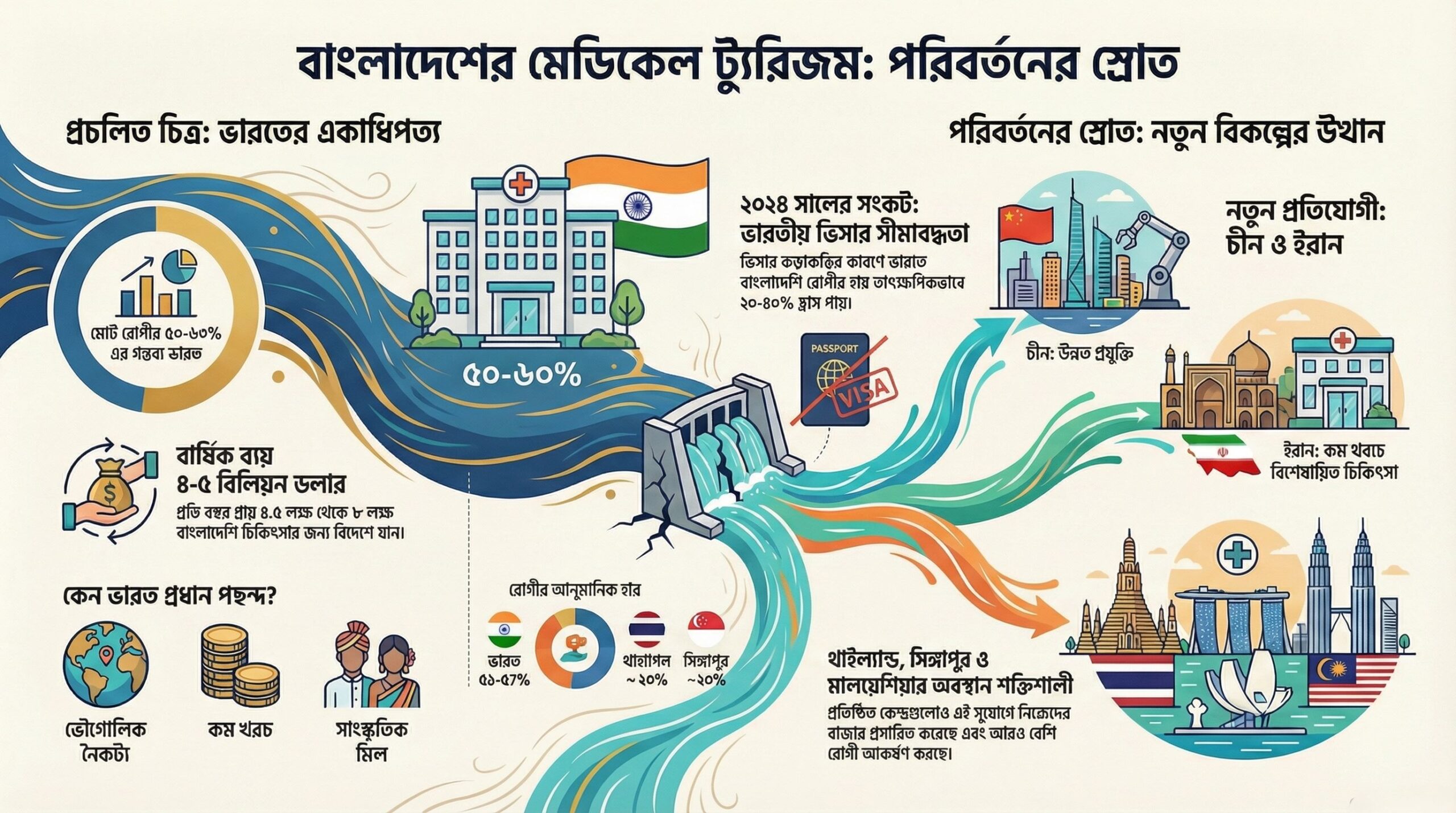
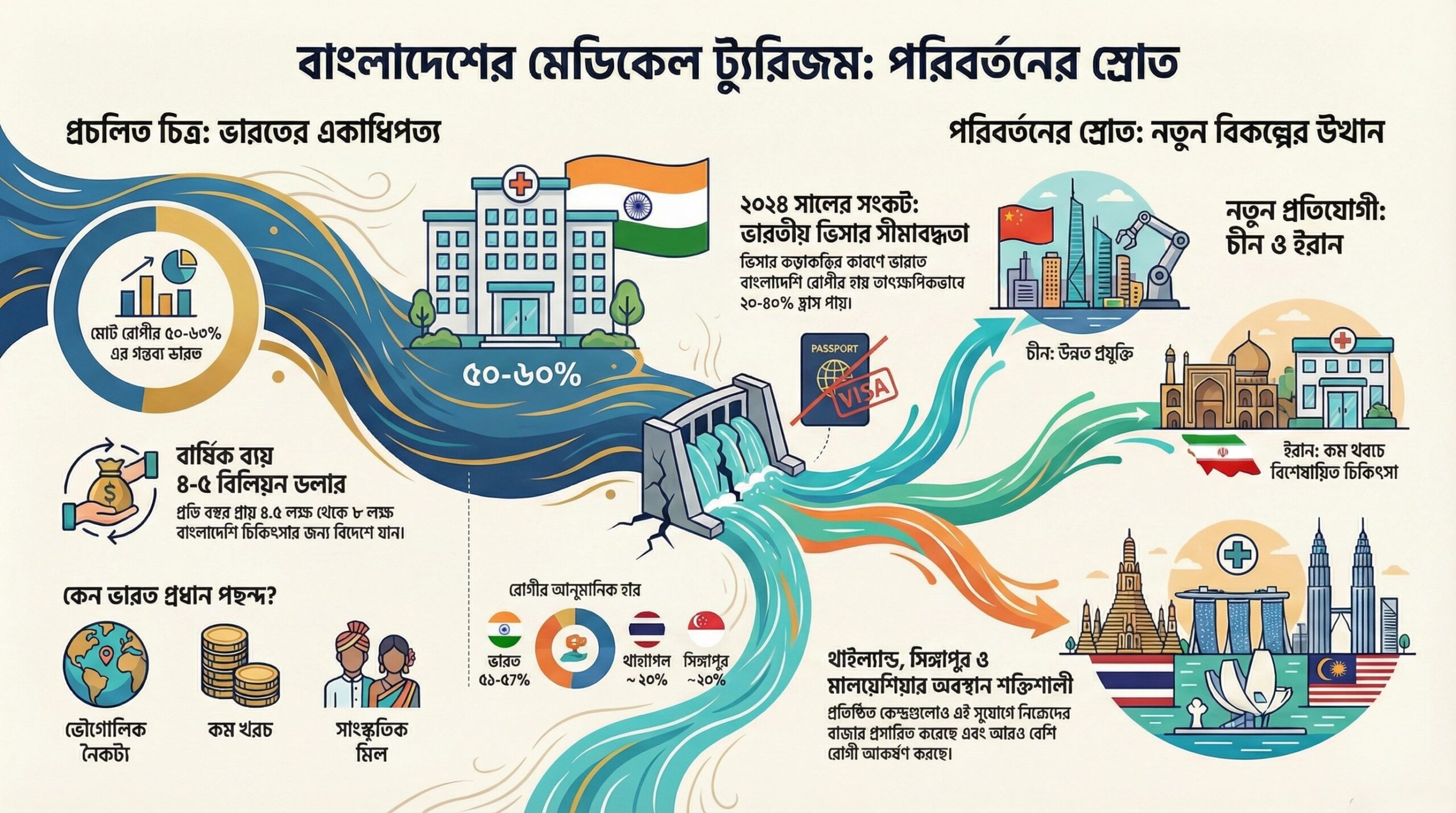
Every year, an estimated 4.5–8 lakh (450,000–800,000) Bangladeshis go abroad for treatment, spending around US$4–5 billion mainly in India, Thailand, Singapore, Malaysia, China, Iran, Turkey and the UAE. India still receives 50–60% of Bangladeshi medical travellers, but visa issues in late‑2024 have pushed many patients to consider China, Thailand, Singapore, Malaysia and Iran as alternatives. This huge outflow reflects gaps in advanced treatment, trust and patient experience inside Bangladesh – and highlights a big opportunity to upgrade local hospitals and retain patients at home.
Key points at a glance
- Scale: Roughly 450,000–800,000 Bangladeshis now travel abroad for treatment each year, with estimated annual spending of US$4–5 billion on foreign healthcare. (The Daily Star)
- Main destination: India remains the single largest destination, receiving about 50–60% of Bangladeshi medical travellers, but its share is under pressure due to visa curbs since mid-2024. (The Business Standard)
- Alternatives: Thailand and Singapore together account for around 40% of outbound patients, while Malaysia, the UK, Japan, China, the UAE, Turkey and others serve smaller but growing niches. (The Daily Star)
- Shock in 2024: Political unrest in Bangladesh and tightened Indian visas in late-2024 caused a sharp, temporary drop in patient flow to India, forcing many Bangladeshis to seek care elsewhere. (Reuters)
- Newcomers: China and Iran have moved quickly to position themselves as new medical destinations, alongside more established hubs in Thailand, Singapore and Malaysia. (Xinhua News)
- Implication for Bangladesh: The scale of outbound spending now rivals or exceeds the public health budget, underlining both the weaknesses of domestic healthcare and the opportunity to retain patients through system reforms and investments. (Bangladesh Journals Online)
Scale of outbound medical tourism and economic impact
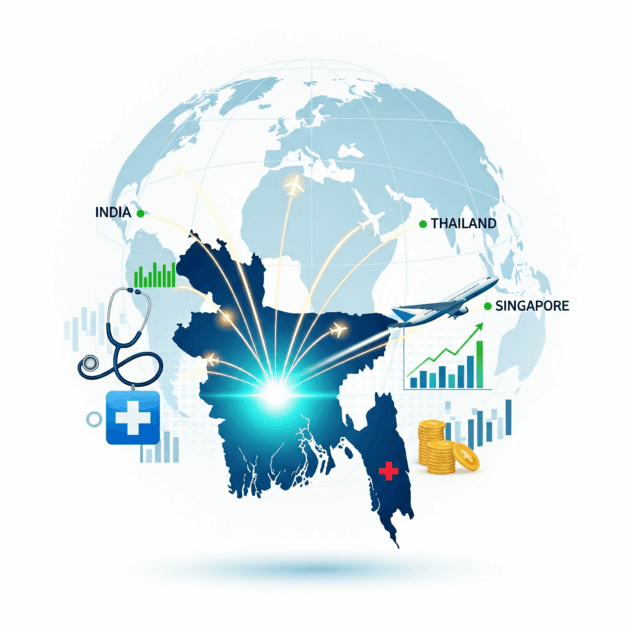
Bangladesh now faces one of the largest outbound medical tourism flows in South Asia. Academic and policy analyses suggest that several hundred thousand Bangladeshis travel abroad every year for diagnosis, elective procedures, and complex treatments. (Bangladesh Journals Online)
- A 2023–2024 review of medical tourism noted that around 4.5 lakh (450,000) Bangladeshis sought treatment abroad in 2023, a 48% increase on the previous year. (The Business Standard)
- Editorial and policy commentary in 2024–2025 often cite figures of “around 800,000” medical travellers per year, arguing that official numbers exclude patients who travel on tourist visas or are not captured in visa statistics. (The Daily Star)
Spending figures are similarly striking:
- In FY 2018–19, one peer-reviewed study estimated that Bangladeshis spent approximately Tk 99.3 billion (around US$1.2 billion) on overseas medical care. (Bangladesh Journals Online)
- More recent business and policy reports suggest that annual outflows now reach US$4–5 billion, an amount comparable to — and in some years higher than — the government’s entire public health budget. (The Daily Star)
This combination of high patient volume and large capital outflow has led experts to describe outbound medical tourism as both a symptom of weaknesses in Bangladesh’s health system and a macroeconomic concern.
Key “push” factors consistently cited in research and media include: (Bangladesh Journals Online)
- Perceived or real gaps in diagnostic accuracy and specialist services
- Long waiting times and overcrowded tertiary facilities
- Trust deficits related to communication, transparency, and patient experience
- Perception that foreign hospitals offer better technology, safety and counselling, sometimes at similar or lower cost for complex care
Traditional destinations and pre-2024 patterns
India’s dominant role
Before the disruptions of 2024, India was overwhelmingly the first choice for Bangladeshi medical tourists.
Several factors explain this dominance:
- Geographical proximity and multiple land and air routes
- Shared or similar language and cultural familiarity
- A dense network of private tertiary hospitals in cities like Kolkata, Chennai, Delhi and Bangalore
- Established referral chains through Bangladeshi agents and hospital representatives in Dhaka and other cities (The Business Standard)
Recent data show:
- Government statistics reviewed in 2024 indicate that around 449,000–450,000 Bangladeshis entered India for medical purposes in 2023, a 48% jump compared to 2022. (The Business Standard)
- Bangladeshis are estimated to represent around 50–60% of India’s international medical tourists, making Bangladesh the single largest source country for Indian medical tourism. (The Daily Star)
Other established Asian hubs
While India absorbs the largest share, Bangladeshi patients have long used other Asian destinations: (The Daily Star)
- Thailand and Singapore serve as high-quality alternatives for those who can afford higher treatment and travel costs.
- Malaysia has actively marketed itself to South Asian patients and has attracted tens of thousands of Bangladeshis, particularly for cardiology, orthopaedics and wellness packages.
- Smaller flows go to Turkey, the UAE, Japan, the UK and the USA, usually for very specialised or high-end procedures.
A widely cited breakdown (based on Prothom Alo reporting) suggests approximately: (The Daily Star)
- 51–57% of Bangladeshi outbound patients going to India
- Around 20% to Thailand
- Around 20% to Singapore
- Small residual shares to the UK, Japan, Malaysia, China and the UAE
In other words, South and Southeast Asia collectively dominate the landscape, with Western destinations reserved for a relatively small, affluent segment.
Shock and partial shift away from India in 2024–2025
Political turmoil and visa restrictions
In August 2024, political unrest and an interim government in Bangladesh led India to scale back consular operations and tighten visa issuance. (Reuters)
Key developments:
- Medical visa appointments were drastically reduced, with reports of daily medical visa processing dropping from an earlier 5,000–7,000 visas a day to under 1,000. (Dhaka Tribune)
- By late-2024, Indian hospitals reported a 20–40% decline in Bangladeshi patient arrivals, with some Kolkata hospitals indicating inflows had fallen to a fraction of pre-crisis levels. (Reuters)
- Analysts estimate that the overall number of foreign medical tourists to India fell by around one-fifth in 2024, largely driven by the drop in Bangladeshi patients. (Reuters)
Because Bangladeshi patients form the backbone of India’s medical tourism market, the shock was immediately felt by Indian providers.
Policy response in India
Recognising the economic impact, India moved in early 2025 to: (Reuters)
- Relax visa procedures for medical travellers
- Introduce simplified e-visa and fast-track channels for international patients
- Encourage hospitals to step up marketing to Bangladesh and other neighbouring countries
Indian hospital groups have expressed confidence that easier visas and pent-up demand will bring Bangladeshi patients back, especially for cardiac, oncology, nephrology and transplant services.
However, the 2024 episode highlighted a structural vulnerability: when India becomes hard to access for any reason, Bangladeshi patients immediately look for alternatives.
Emerging alternative destinations
China: new strategic entrant
China has moved assertively to fill the vacuum created by India’s visa curbs.
Notable steps include: (Xinhua News)
- On 10 March 2025, the first group of Bangladeshi patients, family members, doctors and travel agents flew from Dhaka to Kunming (Yunnan Province) for check-ups and treatment under a pilot medical tourism initiative.
- Chinese and Bangladeshi officials framed the initiative as part of the 50th anniversary of diplomatic relations and a cornerstone of new “people-to-people” health cooperation.
- Several hospitals in Kunming — including major provincial and university hospitals — have been designated to serve Bangladeshi patients.
- Chinese and Bangladeshi sources report that hundreds of Bangladeshis received treatment in China in the months following the first delegation, with expectations of several thousand per year as visa processing and flight connections improve.
- China has agreed to support construction of a 1,000-bed Bangladesh–China Friendship Hospital, with sites discussed in both Purbachal (Dhaka) and Nilphamari, signalling a long-term investment in Bangladesh’s tertiary care capacity.
China positions itself as offering advanced technology, relatively moderate pricing, and a strong state-backed commitment to expanding access — combining medical tourism with strategic soft power.
Iran: niche high-skill, low-cost destination
Iran is also courting Bangladeshi patients, especially for fertility, cosmetic and complex surgical care. (Dhaka Tribune)
- Iranian doctors highlight that Iran ranks very highly regionally for IVF and infertility treatments, and is globally known for organ transplants, cardiac surgery, ophthalmology and cosmetic procedures.
- Reported treatment costs are often one-third of Indian or Turkish prices, and substantially lower than Western costs.
- However, no direct flights between Bangladesh and Iran, visa complexity and low awareness among Bangladeshi patients currently limit scale.
Iranian hospitals and tourism boards have been using Bangladeshi media outreach to raise awareness, arguing that thousands of Bangladeshi patients could benefit if connectivity and information gaps are addressed.
Thailand, Singapore, Malaysia and others: reinforced roles
The 2024–2025 disruption boosted visibility of already-established hubs:
- Thailand has seen a growing influx of Bangladeshi patients, helped by streamlined e-visa processes, direct flights and strong reputations of private hospitals in Bangkok and other cities. (The Daily Star)
- Singapore continues to attract wealthier families for advanced cancer care, complex cardiac and neurosurgical procedures, and high-end diagnostics. (The Daily Star)
- Malaysia remains a smaller but consistent destination, known for cardiology and orthopaedics, and actively markets to Bangladeshi patients via its healthcare travel council. (The Daily Star)
- Turkey, Dubai (UAE) and a handful of Western countries are present in the mix but still account for low single-digit shares of Bangladeshi outbound patients. (The Daily Star)
Overall, the field of destinations is broadening. India remains central, but Bangladeshi patients now have a more diversified portfolio of options.
Changing demand patterns
Post-pandemic rebound and growth in volume
After the COVID-19 disruption, the demand for overseas care rebounded sharply:
- Business and media analyses note a 48% surge in Bangladeshi medical tourists in 2023 versus 2022, driven by pent-up cases and unmet needs from the pandemic period. (The Business Standard)
The profile of outbound care has also shifted:
- Patients travel not only for last-resort surgeries, but also for second opinions, health check-ups, and routine diagnostics.
- Common treatment categories include cardiac surgery, oncology, nephrology and transplantation, infertility services, orthopaedics and eye care. (The Daily Star)
Growing middle- and upper-middle-class households in Bangladesh are more willing to pay for perceived quality, safety and reassurance, particularly when facing life-threatening illness or chronic disease.
Diversification of destination choices
The 2024 Indian visa shock accelerated a pre-existing trend toward diversity:
- Greater media coverage of Thailand, Malaysia, Singapore, China and Iran has made patients more aware that India is not the only option. (The Daily Star)
- Patients and intermediaries increasingly compare packages, waiting times, perceived quality and total costs across multiple countries.
- Some Bangladeshi hospitals and health-tech firms now explicitly market themselves as “second-opinion hubs” or coordinators for outbound treatment, highlighting choice among India, Thailand, China and other destinations. (Scribd)
As one Bangladeshi diplomat noted, “when there is a vacuum, others will come and fill the space” — and that is precisely what countries like China and Thailand have done during India’s period of visa tightening. (Dhaka Tribune)
Opportunities and implications for Bangladesh

The ongoing outflow of patients and capital creates both external opportunities for host countries and internal pressure for reform in Bangladesh.
Opportunities for destination countries
- China is leveraging medical tourism to strengthen strategic ties, investing in joint hospitals and promoting Kunming as a regional healthcare gateway for Bangladeshis. (China Daily)
- Iran sees Bangladesh as a new market for its strong specialties (IVF, transplants, reconstructive and cosmetic surgery) at lower prices. (Dhaka Tribune)
- Thailand, Singapore and Malaysia are trying to capture patients who might previously have defaulted to India, emphasising stability, hospitality and ease of access. (The Daily Star)
This competition is likely to result in more aggressive marketing, tailored packages and possibly more favourable visa regimes targeted at Bangladeshi patients.
Strategic choices for Bangladesh
At the same time, the US$4–5 billion spent abroad each year is a powerful signal that domestic tertiary care, trust and patient experience need strengthening. (The Daily Star)
Key areas highlighted by experts include: (The Daily Star)
- Improving diagnostic accuracy and reliability, particularly in oncology, cardiology and nephrology
- Investing in specialised centres for cancer, cardiac surgery, kidney disease and fertility services outside Dhaka
- Strengthening doctor–patient communication, counselling and transparency, which patients consistently praise in foreign hospitals
- Expanding public–private partnerships, accreditation, and quality assurance in private hospitals
- Using health-tech (telemedicine, second-opinion platforms, better referral systems) to reduce unnecessary outbound trips while still allowing truly complex cases to go abroad
Analyses from Bangladeshi economists and health-tech observers also frame outbound spending as a market opportunity: if even a fraction of this demand can be redirected to trustworthy, high-quality services at home, it would both retain foreign currency and support a more sustainable health ecosystem. (Scribd)
কেন বাংলাদেশিরা চিকিৎসার জন্য বিদেশে যায়? ২০২৪–২০২৫ সালের বিএইচএ বিশ্লেষণের মূল হাইলাইটস
কেন বাংলাদেশিরা চিকিৎসার জন্য বিদেশে যায়?
বাংলাদেশে চিকিৎসা সুবিধা আগের চেয়ে বেড়েছে—তবুও প্রতিবছর বিপুল সংখ্যক মানুষ চিকিৎসার জন্য বিদেশে যাচ্ছে। Bangladesh Health Alliance (BHA)–এর বিশ্লেষণে দেখা যায়, এই প্রবণতাটি শুধু “পছন্দ” নয়—এটি মূলত বিশ্বাস, সময়, সঠিক রোগ নির্ণয়, বিশেষজ্ঞ সেবা এবং ঝুঁকি কমানোর সিদ্ধান্ত–এর সাথে যুক্ত। আপনার শেয়ার করা বিএইচএ ভিজ্যুয়াল রিপোর্টে ২০২৪–২০২৫ সময়কালের প্রেক্ষাপট, ভিসা-প্রভাব, গন্তব্য বদল, এবং খরচের বড় চিত্র তুলে ধরা হয়েছে। The_$5_Billion_Healthcare_Pivot
নিচে একদম ইন-ডেপথ, ডিটেইলড ব্যাখ্যা দিলাম—যা আপনি সরাসরি আর্টিকেলে ব্যবহার করতে পারবেন।
১) “বিশ্বাসের ঘাটতি” — রোগী সিদ্ধান্ত নেয় আত্মবিশ্বাসের ভিত্তিতে
বিদেশমুখী চিকিৎসার সবচেয়ে বড় চালিকা শক্তি হলো ট্রাস্ট গ্যাপ। অনেক রোগী মনে করেন বিদেশে গেলে:
- রোগ নির্ণয় বেশি নির্ভুল হবে
- চিকিৎসা পরিকল্পনা (treatment plan) “স্ট্যান্ডার্ডাইজড” হবে
- হাসপাতালে পরিচ্ছন্নতা, সেফটি প্রটোকল, মনিটরিং—সবকিছু বেশি নিয়ন্ত্রিত থাকবে
- জটিল রোগে (ক্যান্সার/হার্ট/কিডনি) “সেকেন্ড ওপিনিয়ন” দ্রুত এবং মানসম্মত হবে
এখানে “চিকিৎসা” নয়—রোগীর কাছে মূল বিষয় হয়ে দাঁড়ায় রিস্ক কমানো। রোগী মনে করেন: “ভুল চিকিৎসা বা ভুল ডায়াগনোসিস হলে ক্ষতি হবে বেশি—তাই যেখানে ভুলের সম্ভাবনা কম, সেখানেই যাব।”
২) রোগ নির্ণয় ও রিপোর্টের নির্ভুলতা — (Diagnosis Confidence)
BHA রিপোর্টে অন্যতম কারণ হিসেবে উঠে এসেছে ডায়াগনস্টিক সীমাবদ্ধতা ও রিপোর্ট-নির্ভর রোগ নির্ণয়ে অসামঞ্জস্য। The_$5_Billion_Healthcare_Pivot
বাস্তবে রোগীরা যেসব অভিজ্ঞতার কথা বলেন:
- একই টেস্টের রিপোর্ট বিভিন্ন ল্যাবে ভিন্ন আসে
- ইমেজিং/বায়োপসি/প্যাথলজি রিভিউ দরকার হয়
- চিকিৎসকরা রিপোর্টের ওপর “কম ভরসা” দেখালে রোগীর আস্থা ভেঙে যায়
- জটিল রোগে “মাল্টিডিসিপ্লিনারি টিম”–এ আলোচনা (MDT) অনেক জায়গায় সীমিত
বিদেশে বড় সেন্টারগুলোতে একই ছাদের নিচে টেস্ট–রিপোর্ট–স্পেশালিস্ট–টিম ডিসিশন পাওয়া যায় বলে রোগীর সিদ্ধান্ত দ্রুত হয়।
৩) দীর্ঘ অপেক্ষা (Waiting time) এবং সিস্টেম জ্যাম
বাংলাদেশে ভালো চিকিৎসক/ভালো হাসপাতালের ওপর চাপ বেশি। ফলে অনেক ক্ষেত্রে রোগীরা ভোগেন:
- সিরিয়াল পেতে দেরি
- অপারেশনের তারিখ পেতে অপেক্ষা
- ICU/বেড/OT/বিশেষজ্ঞ অ্যাভেইলেবিলিটি সংকট
- জরুরি সিদ্ধান্তে “সময়” হারানোর ভয়
ক্যান্সার, হার্ট ব্লক, নিউরো সমস্যা, কিডনি জটিলতা—এ ধরনের ক্ষেত্রে রোগী সময়কে জীবন-মৃত্যু হিসেবে দেখে। তাই তারা যেখানে দ্রুত পরীক্ষা + দ্রুত সিদ্ধান্ত + দ্রুত চিকিৎসা—সেটাই বেছে নেয়।
৪) বিশেষজ্ঞ সেবা, উন্নত প্রযুক্তি ও জটিল চিকিৎসার “কমপ্লিট প্যাকেজ”
BHA রিপোর্টে উল্লেখিত বড় আকর্ষণ হলো বিদেশে উন্নত প্রযুক্তি ও স্পেশালাইজড কেয়ার–এর সহজলভ্যতা। The_$5_Billion_Healthcare_Pivot
বিশেষ করে রোগীরা বিদেশে যান:
- ক্যান্সার: আধুনিক রেডিওথেরাপি, টার্গেটেড/ইমিউনো থেরাপি, টিম-ভিত্তিক কেয়ার
- হার্ট: জটিল এনজিওপ্লাস্টি/বাইপাস/ইলেক্ট্রোফিজিওলজি
- নিউরো: স্ট্রোক কেয়ার, নিউরোসার্জারি, রিহ্যাব
- IVF/ফার্টিলিটি
- অর্গান-ভিত্তিক বিশেষায়িত সার্জারি
- ট্রান্সপ্লান্ট/অ্যাডভান্সড অরথোপেডিকস
বিদেশের অনেক সেন্টার রোগীর জন্য “ডায়াগনোসিস থেকে ট্রীটমেন্ট পর্যন্ত একসাথে প্যাকেজ” দেয়—যা রোগীর সিদ্ধান্ত সহজ করে।
৫) মোট খরচ বনাম “ভ্যালু”—খরচ বেশি হলেও অনিশ্চয়তা কম
অনেক রোগী মনে করেন—বিদেশে খরচ বেশি, কিন্তু:
- “একবারে কাজ হবে”
- বারবার টেস্ট/বারবার ডাক্তার বদল কম হবে
- জটিলতা হলে সিস্টেম রেসপন্স দ্রুত হবে
- চিকিৎসা পরিকল্পনা পরিষ্কারভাবে ব্যাখ্যা করা হবে
BHA ভিজ্যুয়াল রিপোর্টে মোট আউটফ্লো বিলিয়ন ডলার স্কেলে দেখানো হয়েছে, যা সমস্যাটিকে অর্থনৈতিক ইস্যু হিসেবেও দাঁড় করায়। The_$5_Billion_Healthcare_Pivot
৬) ২০২৪–এর ভিসা-ধাক্কা: “ভারত-কেন্দ্রিক স্রোত” ভেঙে নতুন গন্তব্যে প্রবাহ
BHA বিশ্লেষণে ২০২৪ সালের পর বড় পরিবর্তন হিসেবে এসেছে ভারতীয় মেডিকেল ভিসা সীমাবদ্ধতা। আগে যেখানে দৈনিক ভিসা ছিল হাজারের ওপর, পরে তা উল্লেখযোগ্যভাবে কমে যায়—এতে রোগীর প্রবাহে বড় ধাক্কা লাগে। The_$5_Billion_Healthcare_Pivot
ফলাফল:
- যারা আগে কলকাতা/চেন্নাই/দিল্লি যেতেন—তারা বিকল্প খুঁজতে বাধ্য হন
- নতুন গন্তব্যগুলো “শূন্যস্থান পূরণ” করতে শুরু করে
- থাইল্যান্ড/মালয়েশিয়া/সিঙ্গাপুর/ইরান—এগুলো তুলনামূলকভাবে বেশি আলোচনায় আসে
- চীন বিশেষভাবে সামনে আসে “কৌশলগত প্রবেশ” হিসেবে (রিপোর্টে উল্লেখ আছে) The_$5_Billion_Healthcare_Pivot
৭) নতুন গন্তব্যগুলোর “পজিশনিং” — কারা কীভাবে রোগী টানে?
BHA রিপোর্টের একটি গুরুত্বপূর্ণ অংশ হলো—ভারতের বাইরের গন্তব্যগুলো নির্দিষ্ট চিকিৎসা ক্যাটাগরিতে নিজেদের শক্ত অবস্থান তৈরি করছে। The_$5_Billion_Healthcare_Pivot
রোগীরা সাধারণত যেভাবে বেছে নেন:
- থাইল্যান্ড: প্রাইভেট হাসপাতাল সিস্টেম, সহজ সার্ভিস ফ্লো, “প্রিমিয়াম কেয়ার” ইমেজ
- মালয়েশিয়া: তুলনামূলক সাশ্রয়ী প্যাকেজ, মেডিকেল ট্যুরিজম ইকোসিস্টেম
- সিঙ্গাপুর: জটিল ক্যান্সার/হার্ট/নিউরো—হাই-এন্ড কেয়ার (খরচ বেশি, কিন্তু বিশ্বাস উচ্চ)
- ইরান: কিছু বিশেষায়িত ক্ষেত্রে কম খরচে সেবা
- চীন: প্রযুক্তি ও নতুন ইনভেস্টমেন্ট/সহযোগিতার মাধ্যমে নতুন প্রবেশপথ
৮) রেফারেল ইকোসিস্টেম: এজেন্ট, পরিচিত নেটওয়ার্ক ও “সফট ল্যান্ডিং”
বিদেশে চিকিৎসা মানেই কেবল হাসপাতাল নয়—রোগীর দরকার:
- ভিসা ও ট্রাভেল সহায়তা
- হাসপাতাল অ্যাপয়েন্টমেন্ট ও কাগজপত্র
- ভাষা/কমিউনিকেশন সাপোর্ট
- স্থানীয় গাইড/হোটেল/ট্রান্সপোর্ট
- চিকিৎসা শেষে ফলো-আপ লজিস্টিকস
এ কারণে “রেফারেল নেটওয়ার্ক” রোগীর সিদ্ধান্তকে ত্বরান্বিত করে। রোগী সাধারণত পরিচিতজনের সফল অভিজ্ঞতার ওপর বেশি ভরসা করে।
৯) দেশের ভেতরে মূল বাধা: কেন বিদেশে যাওয়া “সহজ সিদ্ধান্ত” হয়ে গেছে
BHA ভিজ্যুয়াল রিপোর্টে দেশের ভেতরের সমস্যাগুলো স্পষ্টভাবে উঠে আসে: The_$5_Billion_Healthcare_Pivot
- নির্ভরযোগ্য ডায়াগনোসিসের ঘাটতি
- উন্নত চিকিৎসা/বিশেষায়িত সেবার অপ্রতুলতা
- সিস্টেম-ভিত্তিক দীর্ঘ অপেক্ষা
- রোগী-ডাক্তার কমিউনিকেশন গ্যাপ
- জটিল রোগে টিম-ভিত্তিক সিদ্ধান্ত কাঠামোর সীমাবদ্ধতা
১০) BHA–এর দৃষ্টিভঙ্গি: এই ট্রেন্ড কী বোঝায়—সংকট না সুযোগ?
BHA রিপোর্টের অন্যতম শক্ত দিক হলো—এটি শুধু সমস্যা দেখায় না, সুযোগও দেখায়: দেশের ভিতরে একটা বড় “অভ্যন্তরীণ বাজার” আছে—যদি মান ও বিশ্বাস বাড়ানো যায়, তাহলে:
- রোগী দেশের ভিতরেই থাকবে
- অর্থ দেশের ভিতরে থাকবে
- নতুন বিশেষায়িত সেন্টার গড়ে উঠবে
- PPP/ইনভেস্টমেন্টের সুযোগ বাড়বে
- স্বাস্থ্যব্যবস্থা টেকসই হবে
FAQ – quick answers for patients & policymakers
How many Bangladeshi patients go abroad for treatment every year?
Most recent estimates suggest 450,000–800,000 patients per year, depending on the source and how “medical traveller” is defined.
How much money do Bangladeshis spend on overseas treatment?
Current estimates are around US$4–5 billion every year, which is similar to or more than the national public health budget in some years.
Which country is the most popular destination for treatment?
India remains the number one destination, receiving about 50–60% of Bangladeshi outbound patients.
Which other countries are important for Bangladeshi medical tourists?
Thailand, Singapore, Malaysia, China, Iran, Turkey and the UAE are all significant and/or growing destinations.
Why did some patients shift away from India in 2024?
Because of political unrest in Bangladesh and Indian visa restrictions, many patients could not get visas easily and started looking at Thailand, Singapore, Malaysia, China and Iran instead.
How can Bangladesh reduce outbound medical tourism?
By investing in high‑quality tertiary care, improving trust and patient experience, using digital health tools, and ensuring transparent pricing and strong regulation of both hospitals and medical travel agents.
Conclusion
Outbound medical tourism from Bangladesh is large, growing, and increasingly diversified:
- India remains the primary destination, but its near-monopoly has been challenged by visa disruptions and rising competition from China, Thailand, Singapore, Malaysia and Iran.
- Patient numbers and spending continue to rise, driven by unmet needs, trust deficits and the aspirations of a growing middle class.
- The 2024–2025 period has shown that Bangladeshi patients are highly mobile and responsive to changes in visa policy, perceived quality, and information.
- India still dominates, but visa issues and new competitors (China, Iran, Thailand, Singapore, Malaysia) are reshaping the map.
- Patients travel not just for life‑saving surgery, but also for diagnostics, second opinions and elective procedures.
- The US$4–5 billion leaving the country each year is both a warning sign and a policy opportunity.
- With the right investments and reforms, Bangladesh can retain more patients at home, protect foreign exchange, and build a stronger, more trusted health system for the future.
For Bangladesh, this creates a clear policy imperative: either upgrade domestic healthcare to retain patients and capital, or continue to see billions of dollars flow out each year. For foreign providers and governments, the message is equally clear: Bangladeshi patients represent a major regional market, and whoever combines accessibility, quality, trust and affordability will capture a growing share of that demand.