
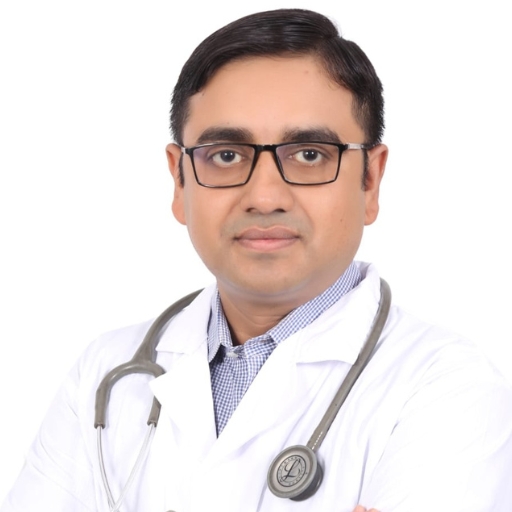
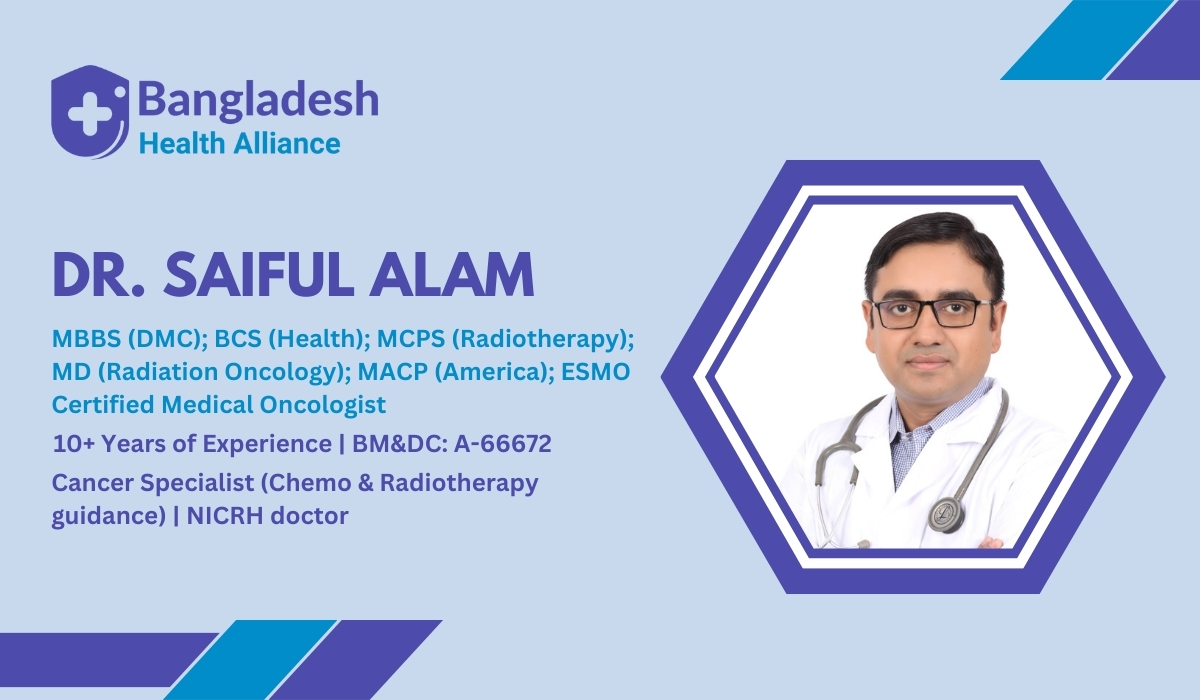
Clinical Oncology (Medical & Radiation Oncology) | BM&DC Reg. No: A66672 | 10+ Years’ Experience
Hearing the word “cancer” can feel overwhelming—ভয় (fear), confusion, and urgent questions all at once: Is it curable? What tests do we need? Which treatment is right? How soon should we start?
Dr. Saiful Alam is a Cancer Specialist (Clinical Oncology—Medical & Radiation Oncology) who helps patients and families move from uncertainty to a clear, step-by-step plan. His consultations focus on understanding your reports, explaining options in simple language, arranging the right next tests (if needed), and guiding treatment decisions and follow-ups in a structured way.
He is professionally affiliated with the National Institute of Cancer Research & Hospital (NICRH), Mohakhali, Dhaka, and also provides private chamber consultations in Khulna.
What to Expect From the Consultation
Cancer care is not only about tests and medicines—it is also about clear communication, emotional support, and choosing the right next step without delay. During consultation, Dr. Saiful Alam typically aims to:
- Explain your diagnosis and likely stage in understandable terms
- Review biopsy/histopathology, scans, and previous prescriptions
- Discuss treatment options and what the timeline may look like
- Guide families on follow-ups and supportive care
- Advise on symptom control and treatment-related side effects
Chamber Address, Visiting Hours & Appointment Numbers (Khulna)
Chamber 1: City Medical College Hospital, Khulna
- Address: 25–26 KDA Avenue, Moylapota Mor, Khulna
- Visiting Hours: Thursday: 5:00 PM – 11:00 PM, Friday: 10:00 AM – 2:00 PM
- Appointment Numbers: 01999-099099, 01999-077077
Chamber 2: Gazi Medical College Hospital, Khulna
- Location: Sonadanga, Khulna
- Visiting Hours: Friday: 4:00 PM – 8:00 PM
- Appointment Number: 01407-031029
Helpful note for patients: Visiting hours can change due to emergencies or hospital duties. Calling before you come helps confirm serial and reduce waiting time.
Educational Qualifications & Professional Credentials
Dr. Saiful Alam’s qualifications include (explained simply for patients; listed as provided):
- MBBS (DMC) — Basic medical degree (Bachelor of Medicine & Surgery) from Dhaka Medical College.
- BCS (Health) — Government health service cadre (Bangladesh Civil Service), indicating public-sector medical service experience.
- MCPS (Radiotherapy) — Postgraduate clinical qualification with training related to radiotherapy care.
- MD (Radiation Oncology) — Advanced specialist degree in radiation cancer treatment planning and management.
- MACP (America) — An ACP honorific designation. In simple terms, it is professional recognition from the American College of Physicians; it is not a separate medical license.
- ESMO exam-based credential (Medical Oncology) — An ESMO professional examination/credential that reflects assessed knowledge standards in medical oncology; it is not a replacement for BM&DC registration.
Why this matters for patients
Many cancer patients need coordinated care across multiple steps—report review, staging tests, treatment planning, and follow-up. Training in clinical oncology can help families get a clearer plan, understand options, and reduce unnecessary delays.
Verification note (patient trust): This profile lists qualifications and chamber information as provided. Patients can verify the doctor’s registration using the BM&DC number and confirm chamber schedules by phone.
What “Clinical Oncology” Means (In Simple Words)
Patients often ask: “Doctor, what is clinical oncology?”
Clinical oncology broadly refers to cancer care that may include:
- Medicine-based treatment planning (often including chemotherapy and other systemic treatments when clinically appropriate)
- Radiotherapy planning and follow-up
- Combined treatment strategies when needed (for example, sequencing medicine and radiotherapy)
- Monitoring response to treatment and adjusting follow-up plans
Every cancer case is different. Even two patients with the “same” cancer type can need different plans depending on stage, tumor characteristics, overall health, and previous treatments. A specialist consultation helps organize these details into a practical roadmap.
When Should You See a Cancer Specialist?
People usually search using symptoms, not medical terms. Consider an oncology consultation if you have:
- A lump in the breast, neck, or anywhere that is increasing in size
- Persistent cough or hoarseness for weeks
- Unexplained weight loss, loss of appetite, or fatigue
- Abnormal bleeding (for example, after menopause or persistent heavy bleeding)
- Difficulty swallowing, ongoing indigestion, or persistent abdominal symptoms
- A wound that does not heal
- Long-standing pain that is getting worse
- A report mentioning “malignancy,” “carcinoma,” “tumor,” “metastasis,” or “suspicious for cancer”
Important: These symptoms do not always mean cancer—but they do mean you should be evaluated properly.
What Patients Commonly Come For (Services & Support)
A quick note on scope (so expectations are clear)
Most chamber visits are consultation-focused—reviewing reports, explaining the diagnosis and likely stage, planning next tests, and guiding treatment decisions. Chemotherapy and radiotherapy are typically delivered through properly equipped hospital services, and the exact plan depends on confirmed diagnosis, staging, and overall health.
During an in-person consultation (especially when you bring complete reports), patients commonly seek help with:
Diagnosis Review & Clear Next Steps
- Reviewing biopsy/histopathology results
- Interpreting scan reports (CT/MRI/PET-CT when available)
- Explaining likely stage and treatment direction
- Clarifying urgency and what to do first
Treatment Planning & Coordination
- Planning required staging tests
- Deciding sequencing (surgery vs. medicine vs. radiotherapy—depending on case)
- Setting a follow-up schedule for review and monitoring
Side-Effect Guidance (Practical & Reassuring)
Families worry about side effects—and it’s normal.
- What side effects are common
- What can be managed at home vs. what needs urgent care
- Nutrition and hydration basics during treatment
- When to call immediately (for example, fever during active treatment)
Second Opinion / Clarification Visit
If you have mixed opinions or incomplete tests, a focused clarification visit can help unify information into one practical decision.
Hospital Affiliation (NICRH, Mohakhali, Dhaka)
Dr. Saiful Alam is affiliated with the National Institute of Cancer Research & Hospital (NICRH), Mohakhali, Dhaka.
For many patients, this matters because national-level cancer centers typically handle complex cases and follow structured care pathways. Patients in Khulna often find reassurance in having guidance connected to experience from a specialized cancer institute.
How to Prepare for Your First Visit
A strong first visit can save weeks. Try to bring a file/folder with:
Reports to bring
- Biopsy/histopathology report (most important)
- Imaging: USG/CT/MRI/PET-CT reports + CDs (if available)
- Endoscopy/colonoscopy reports (if relevant)
- Blood test reports (CBC, liver/kidney function)
- Discharge summaries (if admitted before)
- Previous prescriptions and treatment notes
Bring your medicine list
- Write down your medicines or take clear photos of medicine strips
Bring a trusted family member
Cancer discussions can be emotionally heavy. One family member can help remember instructions and timelines.
Questions you can ask (simple but powerful)
- What is the confirmed diagnosis?
- What stage is it likely to be?
- What treatment options do I have—and why?
- What is the goal: cure, control, or symptom relief?
- How long might treatment take?
- What side effects should I expect, and when?
- Which symptoms are emergency warning signs?
- What follow-up schedule should I maintain?
Consultation Fee
- Consultation Fee: ৳800
Note: Tests, procedures, hospital charges, and treatment costs (if advised) are separate and vary by facility.
Online Consultation
Online consultation is not available (as provided). For cancer assessment, an in-person visit is usually more helpful—especially when report review and physical evaluation are needed.
BM&DC Registration (Trust & Safety)
- BM&DC Number: A66672
BM&DC registration is an important trust marker for patients in Bangladesh and indicates the doctor is formally registered to practice medicine.
Patient Safety: When to Seek Urgent Care
If a patient is on active treatment—or even before treatment—seek urgent medical help (nearest emergency) if there is:
- Fever ≥ 38°C (100.4°F), chills, or suspected infection—especially after chemotherapy
- Severe weakness, confusion, fainting, or new drowsiness
- Uncontrolled vomiting or inability to drink fluids
- Sudden severe breathlessness, chest pain, or bluish lips
- Heavy bleeding or black/tarry stool
- Severe pain not relieved by prescribed medicine
FAQs
How to book an appointment in Khulna?
To get a serial/appointment, please call the chamber numbers first. This helps you confirm the day’s schedule, avoid long waiting time, and know where to register when you arrive.
- City Medical College Hospital, Khulna (Moylapota Mor): 01999-099099, 01999-077077
- Gazi Medical College Hospital, Sonadanga, Khulna: 01407-031029
Small tip: When you call, mention the patient’s name, age, main diagnosis (if known), and whether you’re coming with biopsy/scan reports—it often helps the serial process go smoother.
Visiting hours in Khulna?
Dr. Saiful Alam’s chamber times in Khulna are:
- City Medical College Hospital, Khulna: Thursday 5:00 PM–11:00 PM and Friday 10:00 AM–2:00 PM
- Gazi Medical College Hospital, Sonadanga, Khulna: Friday 4:00 PM–8:00 PM
Tip: Visiting times can change due to duty schedules, emergencies, or patient load—calling first is best. If you are traveling from outside Khulna city, call earlier in the day to reduce travel stress.
Consultation fee?
The consultation fee is 800 BDT (for chamber visits in Khulna).
Good to know: Sometimes hospitals may have separate registration slips or investigation fees depending on services. If you want clarity, ask the serial desk while booking.
What to bring for the first visit?
To make your first oncology visit effective, bring:
- Biopsy / Histopathology report (most important)
- Scan reports (CT/MRI/PET where available) and films/CDs if you have them
- Blood test reports (CBC and other tests you already did)
- Discharge papers (if any surgery/admission happened)
- A list of current medicines (including diabetes/BP drugs) and any allergies
If you have older reports, bring those too—comparison helps. Also, write down 3–5 key questions before coming (for example: “What stage?”, “What is the next step?”, “What side effects should we prepare for?”).
Can I come only for report review?
Yes. Many patients come first for report review and next-step guidance—for example, whether more tests are needed for staging, and what treatment pathway is usually considered.
If your diagnosis is not fully confirmed yet, report review can also help you understand which report is missing (for example, biopsy type, scan, or blood tests). Bringing all pages of reports (not only the summary) is helpful.
Online consultation available?
No. Online consultation is not available at this time.
For appointments, please call the chamber numbers for serial and visit timing. If you cannot come on your preferred day, you can ask the serial line about the next available slot.
Which chamber should I choose?
Choose the chamber that is closer and easier for you to reach:
- Moylapota Mor (City Medical College Hospital): Convenient for many central Khulna areas
- Sonadanga (Gazi Medical College Hospital): Convenient for Sonadanga and nearby zones
If you are unsure, call and ask which session has earlier serial availability. Also consider your travel route—patients often prefer the chamber that reduces traffic time and walking distance, especially if the patient is weak.
When is it urgent?
Seek emergency hospital care immediately if you have:
- Severe breathing trouble or chest pain
- Uncontrolled bleeding
- Sudden weakness, fainting, confusion, or seizures
- Severe uncontrolled pain
- Repeated vomiting/diarrhea causing dehydration
- High fever (especially during/after chemotherapy) or signs of serious infection
For non-emergency symptoms or report review, book a chamber appointment. If the patient is on cancer medicines and suddenly gets worse, do not wait at home—go to the nearest hospital first.
Second opinion available?
Yes. Patients often seek a second opinion to confirm diagnosis/stage understanding, review treatment choices, and feel confident about the plan.
For the best guidance, bring complete reports (biopsy, scans, blood tests) and any previous treatment notes. If you already started treatment, bring the dates and names of medicines if available.
Follow-up after treatment?
Yes. If you have started treatment, bring your treatment details (chemo regimen name if available, cycle dates, radiotherapy notes, surgery/discharge summary). Follow-up planning becomes easier when previous steps are clearly documented.
It also helps to carry a short note about side effects you felt (nausea, mouth ulcers, fever, pain, weakness, appetite loss) and any medicines you are currently taking—so the doctor can guide you more safely and accurately.
If you or a loved one needs a cancer specialist consultation in Khulna, you can book an appointment with Dr. Saiful Alam using the chamber numbers above.
For faster service: keep reports organized, call ahead to confirm serial, and arrive a little early—especially if traveling from outside the city.